Electric vehicle adoption in Azerbaijan is accelerating fast. By 2026, Tesla, BYD, Volkswagen ID and Hyundai Ioniq models are a common sight on Baku streets. But every new EV owner asks the same question first: "How do I charge it at home?"
This guide covers everything you need to know about home charging — what a Wallbox is, which power level to pick, how installation works, and which permits you actually need in Baku.
Why charge at home?
Public charging stations work, but home charging has several decisive advantages:
- Cost: Home electricity is 5–10× cheaper per kWh than public DC charging.
- Convenience: Park, plug in, walk away. Wake up to a full battery.
- No queues: No waiting for a free stall, no fiddling with payment apps.
- Battery health: Slow AC charging (7–11 kW) is much gentler on the battery than fast DC.
What is a Wallbox?
A Wallbox is a wall-mounted AC charging unit designed specifically for EVs. Unlike a regular household socket (Schuko), a Wallbox safely handles high continuous current, comes with a Type 2 connector, and talks to your car using standard charging protocols.
In short: it is the industry-standard home charger that every new EV owner in Germany installs as their first step. Now it is becoming standard in Azerbaijan too.
Which power level: 3.7, 7.4 or 11 kW?
The most important decision when choosing a Wallbox is the power level:
- 3.7 kW (1-phase, 16A): Adds roughly 20 km of range per hour. Suitable for plug-in hybrids or low daily mileage.
- 7.4 kW (1-phase, 32A): About 40 km per hour. The sweet spot for most full EVs — an overnight charge tops up the battery completely.
- 11 kW (3-phase, 16A): About 60 km per hour. Best for cars with large batteries (Tesla Model Y, BYD Tang, ID.4) or drivers covering long distances regularly.
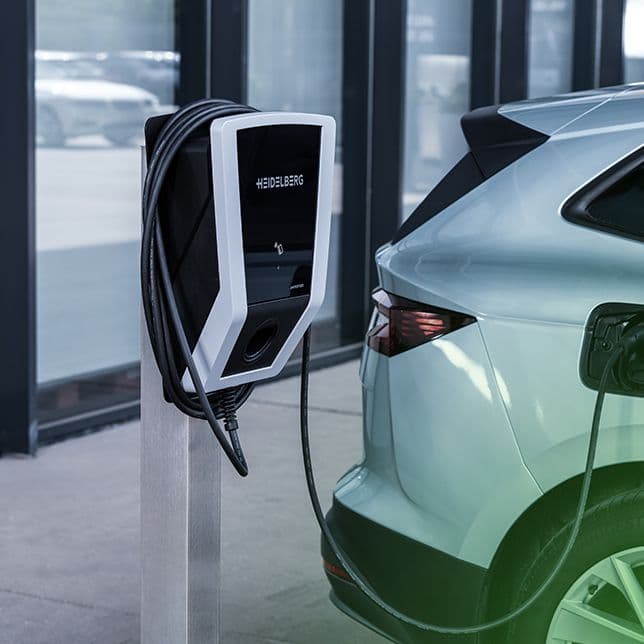
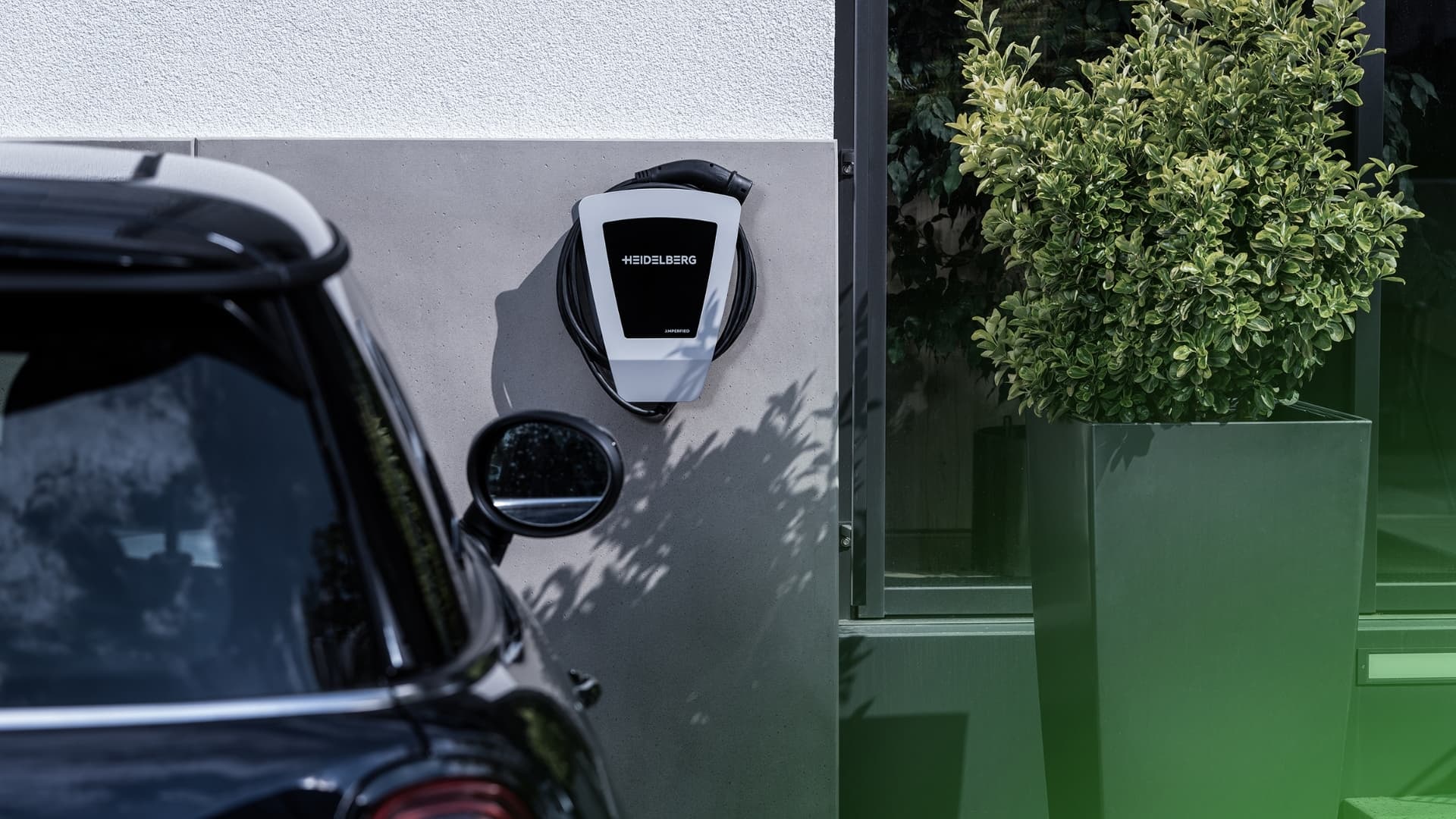
Many villas and modern apartments in Baku already have 3-phase mains, which is why 11 kW is the most popular choice. The Heidelberg Wallbox Home Eco is adjustable from 4 to 11 kW, so it can be configured to match whatever your grid can handle.
Type 2 cable — why it matters
Type 2 is the standard AC charging connector in Europe (and Azerbaijan). Every modern EV — Tesla, BYD, VW, Hyundai, Kia, Audi, Mercedes — has a Type 2 inlet. Heidelberg Wallbox models ship with a 7.5 m attached Type 2 cable, which is enough length to comfortably reach around any garage.
Installation process: 8 steps
- Initial consultation: Message us on WhatsApp or by phone. We ask a few questions — car model, where the parking spot is, distance from your fuse panel.
- Site survey: A technician visits to check your electrical panel and the mounting location.
- Model selection: Based on your grid capacity and needs, we recommend Home Eco or Home.
- Delivery: The unit is delivered from our warehouse in Baku.
- Electrical wiring: A dedicated cable is run from your panel to the Wallbox location, along with the correct breaker (RCD/RCBO) and overcurrent protection.
- Wallbox mounting: The unit is fixed to the wall and wired in.
- Testing: A real charging session with your car verifies the install and all safety features.
- Handover: You receive the warranty card and a short user briefing.
A typical install takes 3–6 hours. With Sharjet, standard installation is included free when you buy a Heidelberg Wallbox.
Cost and payback
The main costs are the Wallbox itself and the electrical work. The question most buyers ask is: "How quickly does it pay for itself?"
Quick math: a typical EV uses about 16 kWh per 100 km. Residential electricity in Baku is around 0.07 AZN/kWh, so 100 km costs roughly 1.20 AZN to drive. The same distance in a petrol car costs 8–10 AZN. A driver covering 50 km per day saves roughly 150–250 AZN per month. That means the Wallbox plus installation typically pays for itself within 1–2 years.
Common mistakes
- Charging from a regular socket: A Schuko outlet is not designed for 8–10 hours of continuous 10 A load. Risk of fire and melted wiring.
- Hiring an uncertified electrician: Wallbox installation requires a Type B RCD, correct cable cross-section, and proper grounding. Use a certified installer.
- Ignoring grid capacity: If your main breaker is 25 A, a 32 A Wallbox running at full power will trip the whole apartment.
- Extension cables: Never extend the Type 2 cable. The installer should run the proper feed from the panel to the charging location.
Why Heidelberg Wallbox?
There are dozens of brands on the market. Here is why we chose Heidelberg:
- German quality: Heidelberg Energy has been building industrial equipment since 1850. Wallbox models are manufactured in Germany.
- 3-year official warranty: The market standard is 2 years.
- IP54 rating: Works in outdoor parking, rain, and cold without issues.
- Simplicity: No bloated "smart" features — just reliable charging.
For more technical detail, see the Wallbox Home Eco and Wallbox Home pages.
Permits in Baku (TTQ and electrical sign-off)
For a private house or villa, installation is usually an in-house job and does not need additional permits — you are modifying your own grid. For apartments, things are slightly more involved:
- Villa/private house: No special notification to AzərEnerji is typically required. If you want to increase your subscribed power capacity, you need to file an application.
- Apartment building: If you install in a covered or underground parking space, you need written consent from the building management (MTK/HOA) in advance. You also need to agree whether the feed comes from the common panel or your own meter.
- TTQ (Technical Acceptance): High-power equipment must be installed by a certified specialist with a sign-off act. At Sharjet, we handle all the paperwork ourselves.
Next steps
Home charging is the kind of one-time investment that pays back for 10+ years without issue when installed correctly. If you want to know which model fits your situation, get in touch — we offer a free consultation and a concrete quote within 24 hours.
Related: Home vs Home Eco comparison · Installation cost and process